

Built, Not Bought: The Microcement Mindset
In a design world crowded with mass-produced finishes, microcement stands apart because it feels made rather than merely selected. Unlike off-the-shelf materials that arrive as fixed products, microcement is hand-applied in thin layers directly onto existing surfaces, which gives each project a crafted, site-specific character.
That is the core of the microcement mindset: it treats a surface as something shaped through process, skill, and restraint. The result is not just a coating, but a finish that can unify floors, walls, ceilings, and built elements into one continuous architectural language.
A Material for Intentional Spaces
Microcement supports a design approach centered on clarity, continuity, and calm. Because it can create grout-free, joint-light surfaces, it reduces visual interruption and helps rooms feel larger, quieter, and more cohesive.
Designers and architects increasingly choose it not only for minimal aesthetics, but also for its ability to connect spaces without adding bulk. Its very thin build-up, often around 3 millimeters, makes it especially useful in renovations where preserving existing levels and reducing disruption matter.
Why the Mindset Matters
To choose microcement is to value process over instant polish. It reflects a preference for materials that reveal the hand of the maker through subtle texture, controlled variation, and a more tactile, architectural finish than many factory-made alternatives.
This mindset also rejects the idea that luxury must be loud. Microcement fits a more mature version of minimalism, one that favors refined simplicity, surfaces that age well, and spaces that feel edited rather than decorated.
More Than a Trend
Microcement has grown in importance because it balances aesthetics with performance. Sources describing its role in modern architecture highlight strong adhesion to existing substrates, low demolition requirements during renovations, and long-term durability when installed correctly.
Its sustainability appeal is also practical rather than symbolic. Applying microcement over existing tiles, plaster, marble, or terrazzo can reduce waste and avoid the heavy material turnover that comes with full surface replacement.
The Emotional Appeal
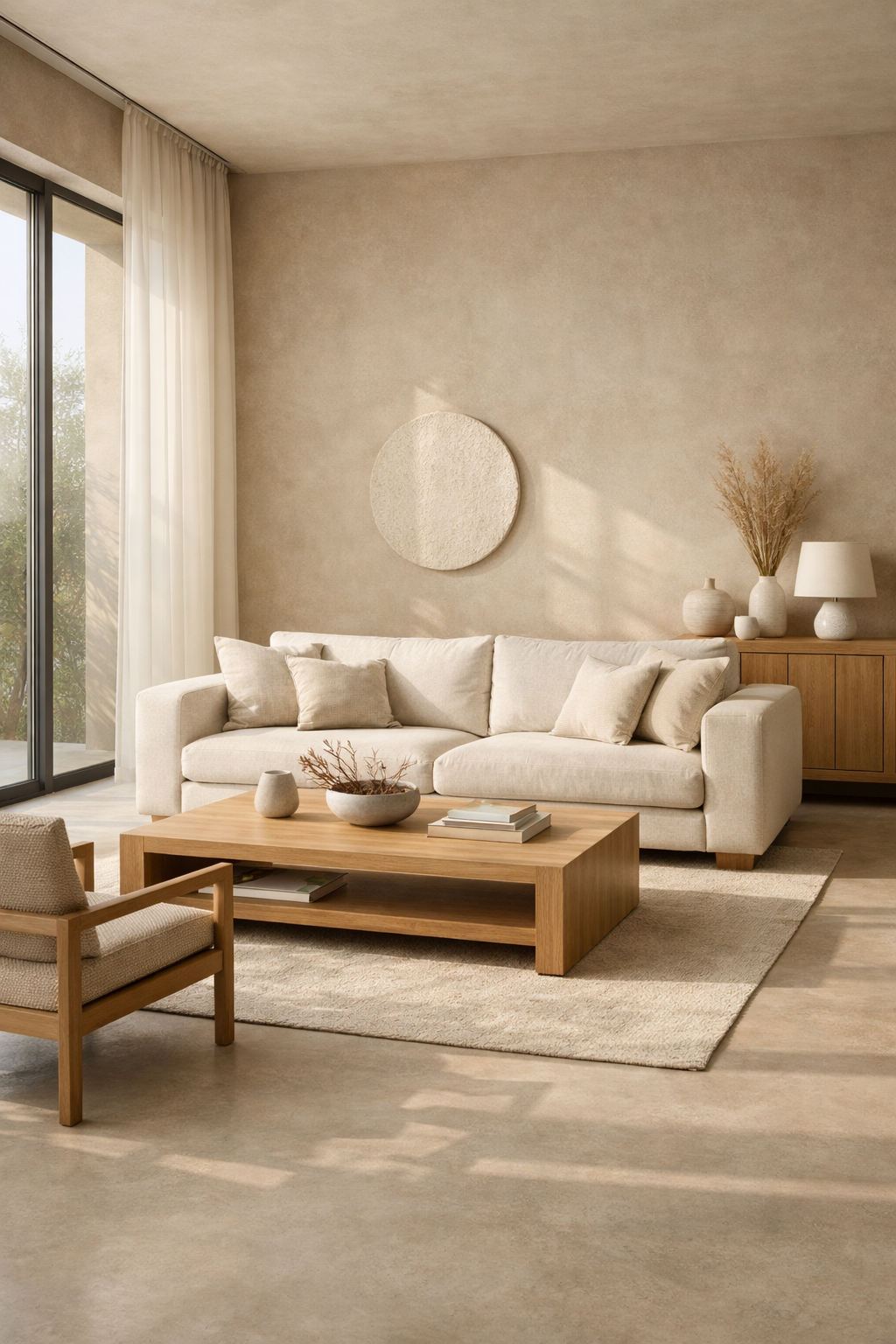
What people often respond to in microcement is not just the look of concrete, but the feeling of permanence without heaviness. A seamless mineral surface can make a room feel grounded, architectural, and calm, while still keeping warmth through tone, texture, and the presence of hand application.
That is why microcement works especially well in homes, hospitality spaces, and wellness-oriented interiors. It supports environments that feel intentional and lived in, where the finish becomes part of the atmosphere rather than a separate decorative layer.
Sample article version
If you want a cleaner, publish-ready version, here is one:
Built, Not Bought: The Microcement Mindset
Some materials are chosen from a catalog. Others are created in place, shaped by hand, and made to belong exactly where they are. Microcement belongs to the second category.
That is what makes it more than a finish trend. Microcement represents a mindset: one that values craft over convenience, continuity over clutter, and permanence over disposable design. It is not simply bought and installed. It is built, layer by layer, into the identity of a space.
As a material, microcement is a thin cement-based coating made from cement, resins, fine aggregates, additives, and pigments. What makes it especially compelling is its ability to adhere to existing surfaces, from tiles and plaster to marble and terrazzo, allowing designers to transform spaces without the noise, waste, and disruption of full demolition.
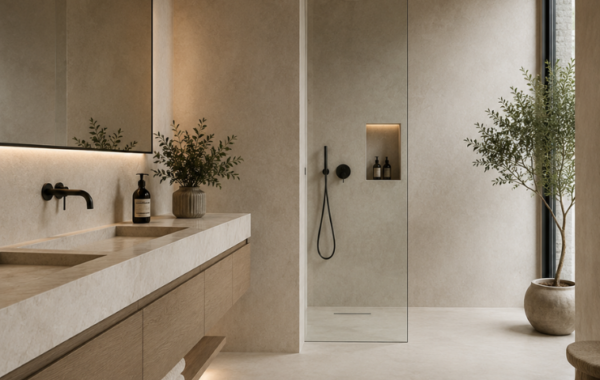
But the real appeal of microcement is emotional as much as practical. Its seamless application creates visual calm. Floors can flow into walls, bathrooms can feel carved rather than assembled, and entire rooms can read as one unified composition. Without grout lines, heavy transitions, or competing textures, the eye rests more easily.
This is where the “built, not bought” philosophy becomes visible. Microcement does not hide behind perfection. It embraces subtle variation, hand-worked texture, and the quiet depth that comes from skilled application. Every surface carries evidence of process. Every finish feels specific to its setting.
In that sense, microcement aligns with a broader shift in contemporary design. Minimalism today is less about stark emptiness and more about refined simplicity. People want spaces that feel calm but not cold, clean but not lifeless, restrained but still tactile. Microcement answers that demand with a surface that is architectural, durable, and warm in its own understated way.
Its growing popularity also reflects practical values. Because it is applied in very thin layers, microcement works well in renovations. Because it can go over existing substrates, it can reduce construction waste. Because it creates a continuous skin across multiple surfaces, it helps connect rooms and guide movement through a space with less visual noise.
To embrace microcement is to believe that good design is not about adding more. It is about editing well, building carefully, and choosing materials that do more with less. It is about understanding that the most powerful surfaces are not always the ones that shout for attention, but the ones that quietly shape how a place feels.
Built, not bought, is not just a tagline for microcement. It is the reason the material resonates. It speaks to a way of designing that is slower, smarter, and more connected to the making of space itself.